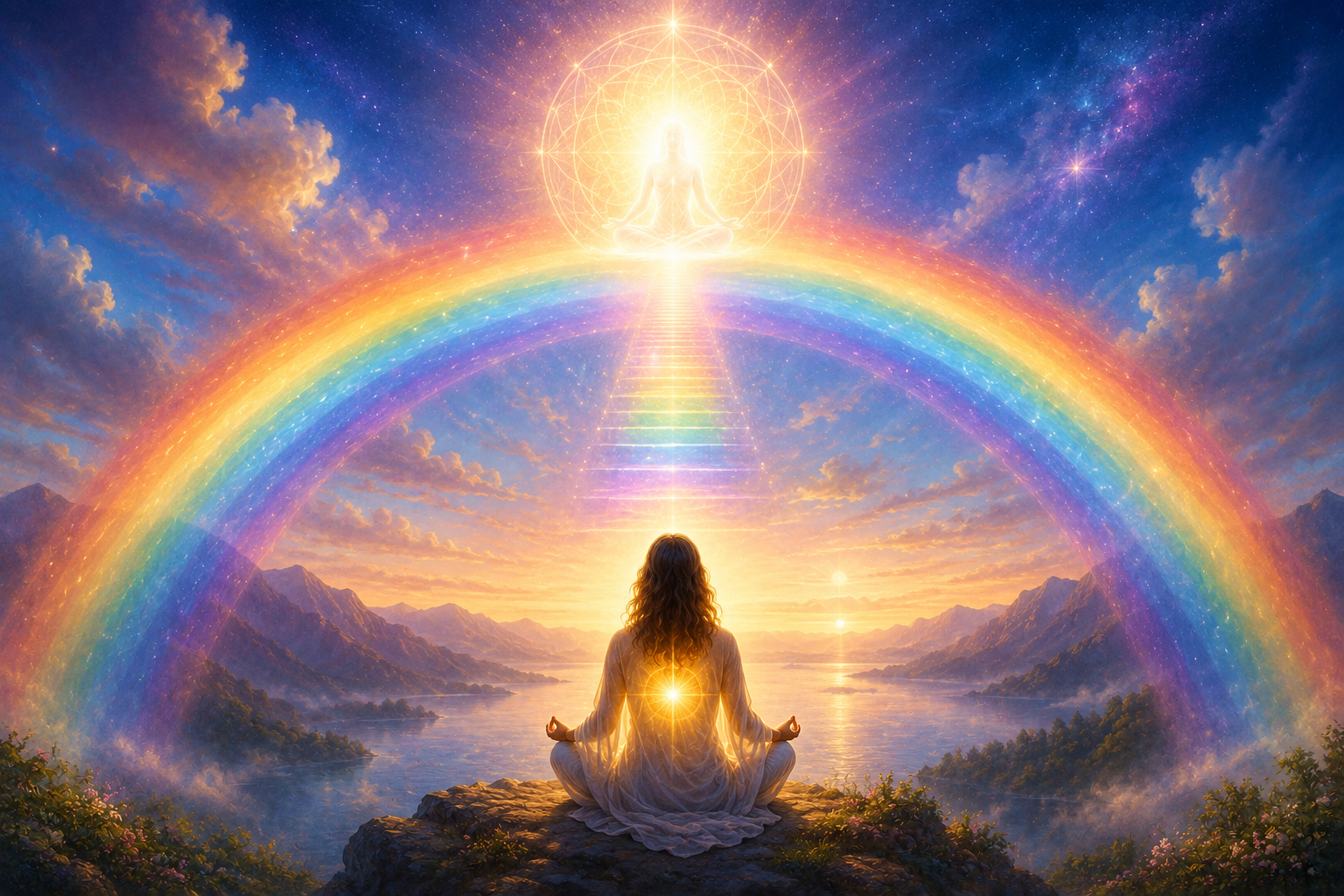
What colors have attracted you lately? Is it different from your usual? It might have a message for you. What is your main color? It is a message. Enjoy this copendium.
The spiritual meanings of the rainbow colors vary somewhat among traditions, but the following interpretations are widely used in energy healing, chakra work, metaphysics, and spiritual development.
❤️ Red — Life Force, Grounding, Survival
Connection to the Earth
Physical vitality and strength
Courage and determination
Safety, stability, and belonging
The will to live fully
Spiritual lesson: I am here. I belong. I have the right to exist.
🧡 Orange — Creativity, Joy, Emotion
Emotional expression
Creativity and inspiration
Pleasure and enjoyment of life
Relationships and intimacy
Flexibility and flow
Spiritual lesson: I embrace my feelings and create from my authentic self.
💛 Yellow — Personal Power, Confidence, Wisdom
Self-esteem
Confidence and self-worth
Mental clarity
Discernment
Healthy boundaries
Spiritual lesson: I trust myself and shine my unique light.
💚 Green — Love, Compassion, Healing
Unconditional love
Forgiveness
Harmony
Growth and renewal
Connection to nature
Spiritual lesson: I give and receive love freely.
💙 Blue — Truth, Communication, Integrity
Authentic expression
Speaking one's truth
Honest communication
Listening deeply
Peace and serenity
Spiritual lesson: My voice matters. I express my truth with grace.
💜 Indigo — Intuition, Insight, Inner Knowing
Psychic perception
Intuition
Dreams and visions
Discernment
Spiritual awareness
Spiritual lesson: I trust my inner guidance.
🤍💜 Violet — Spiritual Connection, Transformation
Divine wisdom
Higher consciousness
Transmutation of lower energies
Spiritual awakening
Unity with Source
Spiritual lesson: I am connected to the Divine.
✨ White (Often Considered Beyond the Rainbow)
Many spiritual traditions see white as containing all colors.
Purity
Divine Light
Unity
Protection
Higher consciousness
Spiritual lesson: I am one with all that is.
🌈 The Rainbow as a Whole
Spiritually, the rainbow represents:
The bridge between Earth and Heaven
Integration of body, mind, and spirit
Wholeness and balance
Divine promise and hope
The soul's journey from survival to enlightenment
In healing work, the rainbow can be seen as the soul's path of evolution:
Red → Orange → Yellow → Green → Blue → Indigo → Violet
moving from:
Survival → Feeling → Power → Love → Truth → Wisdom → Divine Connection
Given your work with the Spiral Return, I might phrase it this way:
The rainbow is not merely a spectrum of colors; it is a map of consciousness. Each color represents a stage of remembering who we truly are. As we move through the colors, we return to ourselves—grounded in Earth, open in heart, clear in voice, and radiant in spirit. 🌈✨
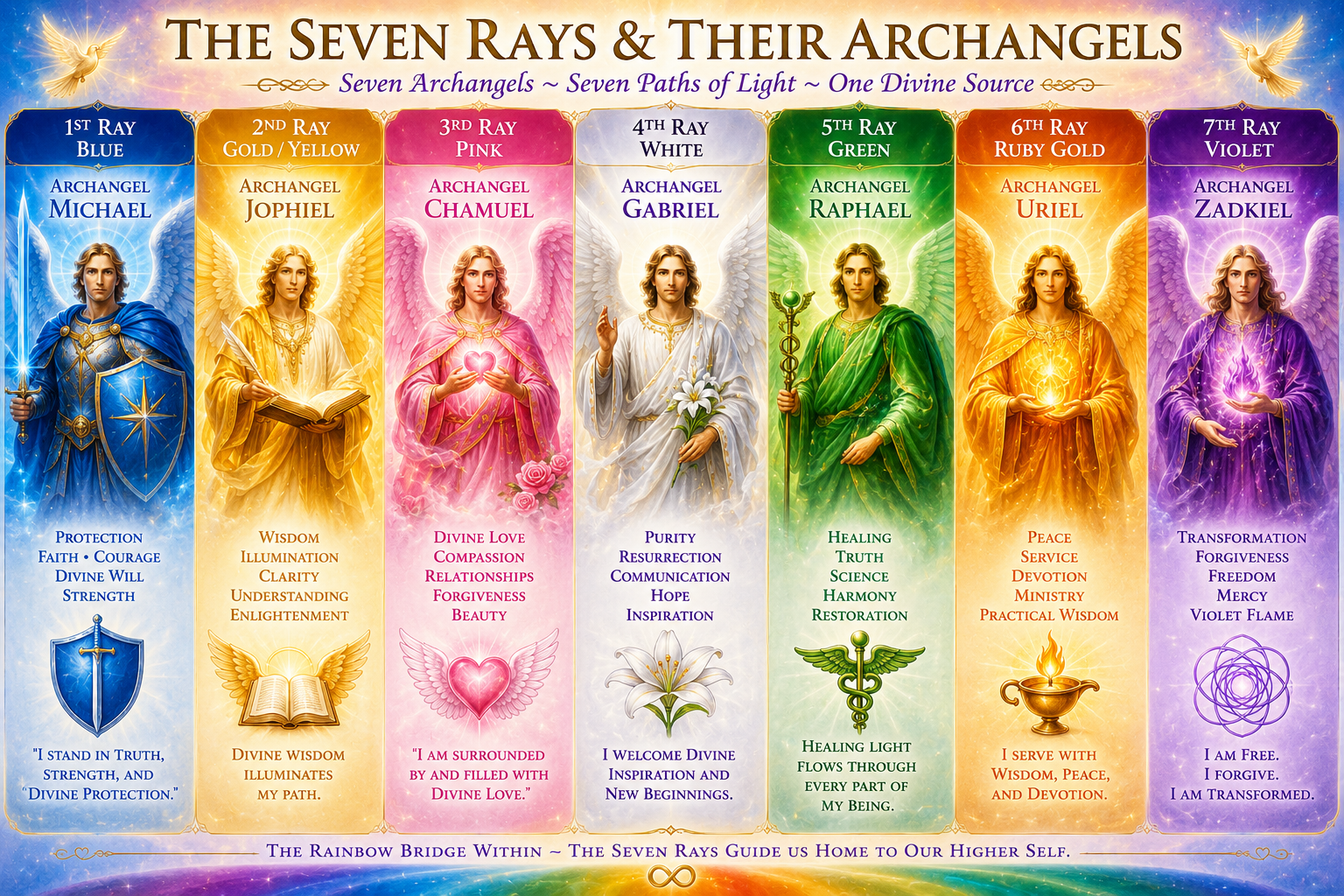
Yes. Different spiritual traditions associate various angels, archangels, and divine qualities with colors. There is no single universally accepted system, but the following is one of the most widely used in angelic healing, esoteric Christianity, Theosophy, and modern metaphysical traditions.
❤️ Red — Archangel Uriel
Themes: Grounding, courage, protection, practical wisdom, manifestation
Uriel is often associated with the wisdom of the Earth and helping us remain steady during times of change.
Spiritual lesson: I am here. I belong. I am supported by the Earth.
Prayer:
"Archangel Uriel, help me stand firmly upon the Earth and trust the path before me."
🧡 Orange — Archangel Gabriel
Themes: Creativity, emotional healing, inspiration, new beginnings
Gabriel is known as the messenger of God and often assists with creative expression, writing, teaching, and bringing forth new life.
Spiritual lesson: I embrace my feelings and create from my authentic self.
Prayer:
"Archangel Gabriel, help me express my gifts and bring new possibilities into the world."
💛 Yellow — Archangel Jophiel
Themes: Joy, confidence, enlightenment, positive thinking
Jophiel's name means "Beauty of God." She is associated with illumination, wisdom, and seeing the beauty hidden within life's experiences.
Spiritual lesson: I trust myself and shine my unique light.
Prayer:
"Archangel Jophiel, illuminate my mind with wisdom and beauty."
💚 Green — Archangel Raphael
Themes: Healing, compassion, restoration, harmony
Raphael is perhaps the most recognized healing angel and is associated with physical, emotional, and spiritual healing.
Spiritual lesson: I give and receive love and healing freely.
Prayer:
"Archangel Raphael, guide me into wholeness and harmony."
💙 Blue — Archangel Michael
Themes: Truth, protection, courage, integrity
Michael is often depicted with a blue flame or blue mantle. He helps individuals speak their truth, establish healthy boundaries, and release fear.
Spiritual lesson: My voice matters. I express my truth with courage and grace.
Prayer:
"Archangel Michael, strengthen my voice and protect my path."
💜 Indigo — Archangel Haniel
Themes: Intuition, inner knowing, psychic awareness, moon wisdom
Haniel is associated with heightened intuition, spiritual sensitivity, and trusting one's inner guidance.
Spiritual lesson: I trust my inner wisdom and divine guidance.
Prayer:
"Archangel Haniel, help me see clearly with the eyes of my soul."
🤍💜 Violet — Archangel Zadkiel
Themes: Transformation, forgiveness, spiritual freedom, transmutation
Zadkiel is traditionally associated with the Violet Flame and the transformation of fear, limitation, and suffering into wisdom and compassion.
Spiritual lesson: I release the past and embrace divine transformation.
Prayer:
"Archangel Zadkiel, help me transform all that no longer serves my highest good."
✨ White — Archangel Metatron
Themes: Divine Light, sacred geometry, ascension, unity consciousness
Metatron is often associated with pure white light, higher dimensions, sacred geometry, and the soul's evolutionary journey.
Spiritual lesson: I am one with Divine Light.
Prayer:
"Archangel Metatron, align me with my highest expression and divine purpose."
🌈 The Rainbow Angel Path
Seen as a spiritual journey, the rainbow can be viewed as a progression through the guidance of these angelic forces:
Color Angel Soul Lesson
❤️ Red Uriel Grounding and Trust
🧡 Orange Gabriel Creativity and Expression
💛 Yellow Jophiel Confidence and Wisdom
💚 Green Raphael Healing and Love
💙 Blue Michael Truth and Courage
💜 Indigo Haniel Intuition and Vision
🤍💜 Violet Zadkiel Transformation and Forgiveness
✨ White Metatron Divine Unity and Purpose
A Spiral Return Perspective
For your Spiral Return work, you might see these colors not as a ladder to climb but as a spiral to revisit repeatedly. At different stages of life, the soul may be called to strengthen grounding with Uriel, heal with Raphael, speak truth with Michael, or transform old ancestral patterns with Zadkiel.
The rainbow is a living bridge between Earth and Spirit. Each color carries a divine quality, each angel offers a gift, and each step along the spectrum invites us to remember another aspect of our true nature. As we move through the colors, we do not become something new—we return to who we have always been. 🌈✨👼
In the teachings of The Seven Rays as presented by the I AM Activity, The Bridge to Freedom, and later Ascended Master Teachings, each ray is traditionally overseen by a Chohan ("Lord" or "Master" of the Ray). Different organizations sometimes vary slightly, but the following is the most commonly accepted list.
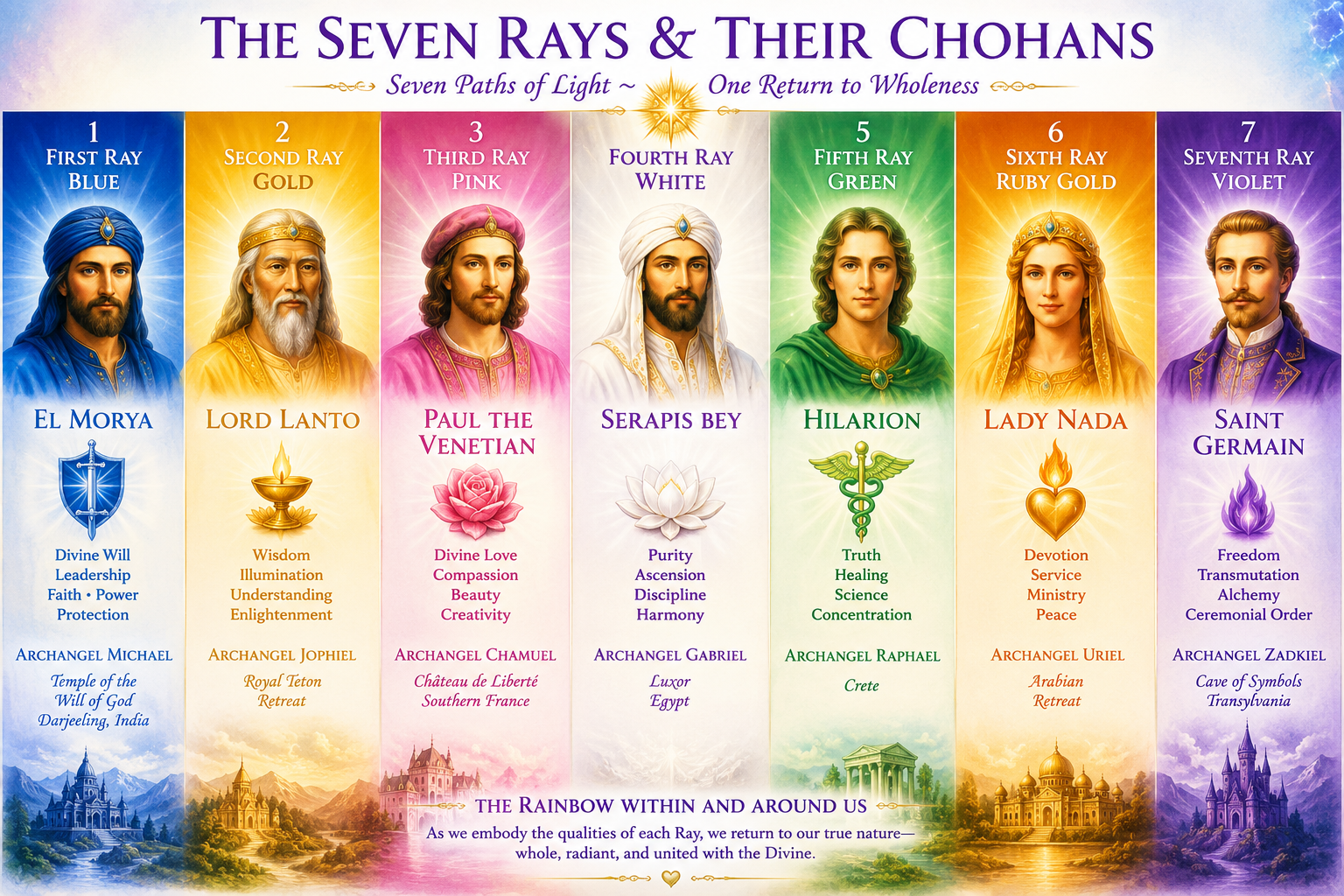
🌈 The Seven Chohans of the Seven Rays
Ray Color Chohan Qualities
1st Ray Blue El Morya - Divine Will, Leadership, Faith, Power, Protection
2nd Ray Yellow/Gold Lord Lanto - Wisdom, Illumination, Understanding, Enlightenment
3rd Ray Pink Paul the Venetian - Divine Love, Compassion, Beauty, Creativity
4th Ray White Serapis Bey - Purity, Ascension, Discipline, Harmony through Conflict
5th Ray Green Hilarion - Truth, Healing, Science, Concentration, Manifestation
6th Ray Ruby Gold (or Purple-Gold) Lady Nada - Devotion, Service, Ministry, Peace, Brotherhood
7th Ray Violet Saint Germain - Freedom, Transmutation, Alchemy, Ceremonial Order
🔵 First Ray – El Morya Color: Royal Blue
Qualities:
Divine Will
Strength
Courage
Leadership
Protection
Historical incarnations often attributed:
King Arthur
Thomas More
Akbar the Great
Temple:
Temple of the Will of God, Darjeeling, India
🟡 Second Ray – Lord Lanto
Color: Golden Yellow
Qualities:
Wisdom
Illumination
Understanding
Teaching
Historical incarnations often attributed:
Ancient ruler in China
Temple:
Royal Teton Retreat
🌸 Third Ray – Paul the Venetian
Color: Pink
Qualities:
Love
Beauty
Compassion
Artistic expression
Historical incarnations often attributed:
Paolo Veronese (Venetian painter)
Temple:
Château de Liberté, Southern France
⚪ Fourth Ray – Serapis Bey
Color: White
Qualities:
Purity
Ascension
Discipline
Harmony
Historical incarnations often attributed:
Egyptian priesthood traditions
Temple:
Luxor, Egypt
🟢 Fifth Ray – Hilarion
Color: Emerald Green
Qualities:
Healing
Science
Truth
Precision
Historical incarnations often attributed:
Apostle Paul
Saint Hilarion
Temple:
Crete
🟠✨ Sixth Ray – Lady Nada
Color: Ruby-Gold
Qualities:
Devotion
Service
Ministry
Peace
Historical incarnations often attributed:
A priestess in Atlantis
Some traditions associate her with Mary Magdalene, though this is not universal
Temple:
Arabian Retreat
💜 Seventh Ray – Saint Germain
Color: Violet
Qualities:
Freedom
Transformation
Sacred Ritual
Alchemy
Historical incarnations often attributed:
Francis Bacon
Christopher Columbus
Saint Joseph
Temple:
Cave of Symbols, Transylvania
Additional Masters Frequently Associated with the Rays
Many traditions also include:
💙 Archangel Michael
First Ray
💛 Archangel Jophiel
Second Ray
💗 Archangel Chamuel
Third Ray
⚪ Archangel Gabriel
Fourth Ray
💚 Archangel Raphael
Fifth Ray
🧡 Archangel Uriel
Sixth Ray
💜 Archangel Zadkiel
Seventh Ray
The Feminine Complements (Twin Flames)
Many ray teachings include the divine complements of the Chohans:
Chohan
Divine Complement
El Morya
Miriam
Lord Lanto
(varies by teaching)
Paul the Venetian
(often considered self-contained in the Love Ray)
Serapis Bey
(varies)
Hilarion
(varies)
Lady Nada
(feminine Chohan)
Saint Germain
Lady Portia
A Spiral Return Perspective
For your work, the Seven Rays can be viewed as seven pathways through the Spiral Return:
Blue — Return to Divine Will
Gold — Return to Wisdom
Pink — Return to Love
White — Return to Purity
Green — Return to Truth and Healing
Ruby-Gold — Return to Sacred Service
Violet — Return to Freedom
Together they form a complete spectrum of soul development, much like the rainbow, guiding the individual from personal healing toward spiritual mastery. 🌈✨